Here’s a fun way to add some variation to your solo training during the pandemic – playing cards!
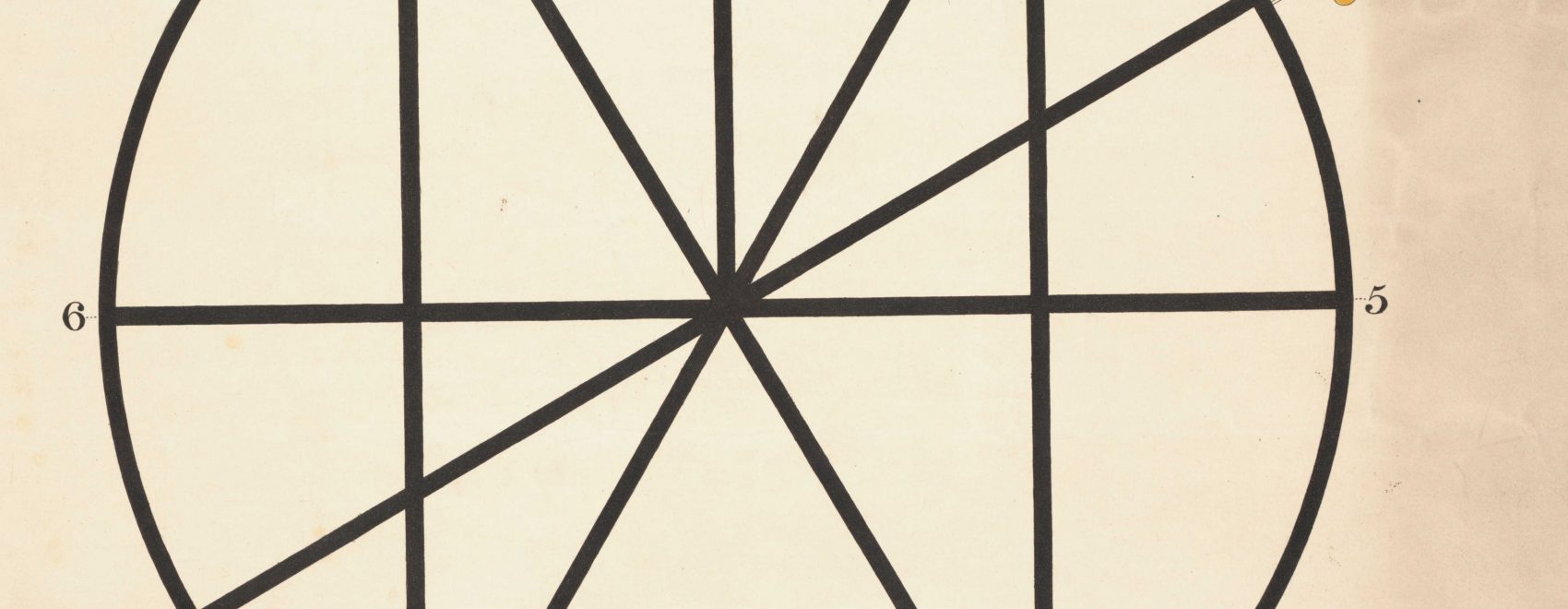
The nice thing about using playing cards is that you almost certainly already have some at home ready to go. Find two decks of cards and grab the aces, 2’s, 3’s and so on up to the 8’s. Each card will correspond to a blow in your system. The numbers are the origin from your perspective, so 🂱 is a descending cut from right to left.


To learn the cutting numbers, practice making full cuts in order from 1 through to 7 and a false edge cut from 8, saying each number as you go. To remember what each suit means you can use the following mental associations: Hearts are full cuts because they are brave and need commitment; Diamonds are half cuts, because they are also red and the diamond shape is a bit like an arrowhead which moves quickly; Spades are thrusts because they’re pointy; and clubs are false edge cuts because you have to use the weight at the end of the sword to hit hard with them.
To use the cards for sword handling practice, shuffle the deck very well then draw an arbitrary number (I like drawing three at a time), and perform the cuts in the order drawn and repeat it a few times trying different footwork and thinking about how you might be able to use it when you’re fencing. Not everything needs to be a committed attack, maybe one of the actions invites the opponent to attack you and then you use the others to hit them in whatever openings they give you when they attack. Practice the pattern until you feel like you have got all you can out of it (three repetitions is a good start), and then do it all over again. I keep my deck near my pell and do some cuts every time I walk past the deck.
If one of the cards doesn’t make sense or isn’t used in your system, either take it out or repurpose it for an action that does – for Bolognese I took out: 🂸, 🃈, 🃃, 🃄, 🃗. Any thrust that didn’t make sense (🂧, 🂨) I repurposed as the direct centreline thrust. Take and add whatever cards you need to match your system; there are lots of possibilities here including adding footwork, parries, guard changes, or whatever else takes your fancy. You could even print an elaborate set of custom cards or a game like Nimble, (which is what inspired me to put together this card game in the first place). If you want to put in more preparation time and use dedicated cards with more targets footwork actions and modifying cards, Nimble is probably a better fit for you. To get started quickly and to have separate cards for each action use the playing card system I have given above; for me it better matches the comprehensive cutting systems found in Meyer or the Bolognese School of fencing.
If you’re curious about the numbering system or the origin of the cutting diagram, it began with the British Military Cutting diagram for cutlass, sabre, or broadsword. The cutting pattern it comes with is neat and you can find some other interesting patterns using the same schema here.

The sabre system is missing the vertical rising cut though so I added it in and put it on Marozzo’s cutting segno.

And just to show that we have now fully reinvented the wheel, here’s the cutting diagram from Joachim Meyer’s 1570 text.
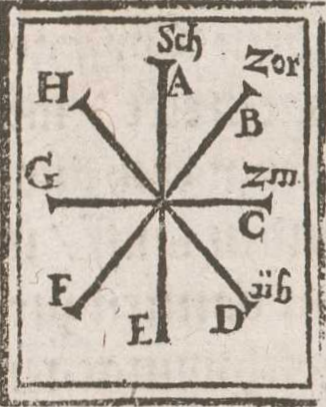
Most systems have similar cutting diagrams; for further reading Greg Mele’s article unpacking Fiore’s cutting diagram covers more of this ground.
Sources
Angelo, Henry, and Rowlandson, Thomas, “Naval cutlass exercise” (1813). Prints, Drawings and Watercolors from the Anne S.K. Brown Military Collection. Brown Digital Repository. Brown University Library. https://repository.library.brown.edu/studio/item/bdr:238253/
Meyer, Joachim, “Gründtliche Beschreibung der Kunst des Fechtens” (1570). http://wiktenauer.com/wiki/Joachim_Meyer#/media/File:Meyer_1570_Sword_Cuts.png

Marozzo, Achille, “Opera Nova” (1536). https://books.google.com.au/books?id=FbfQ9qfDsvoC&redir_esc=y&hl=en
Leave a Reply