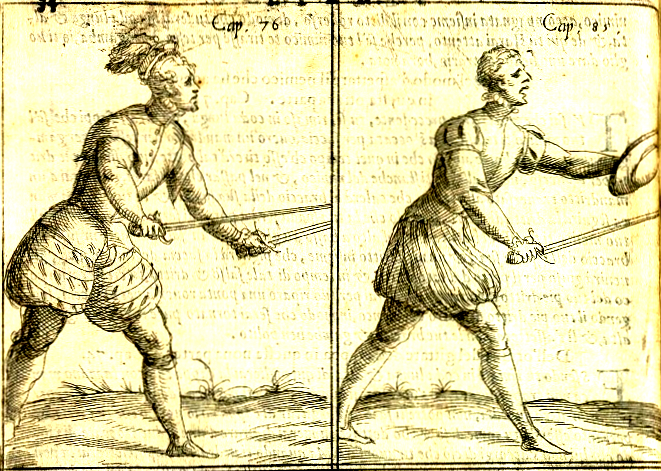
You can see my translation of Manciolino’s Two Sword material here, or on wiktenauer alongside the Italian.
It is formatted with the translation on the left and my interpretation and summary on the right. I’d love to know what people think about this format, as well as my choice to use Italian guard names in italics and not to italicize the names of the blows.
I translated this material because I spent September teaching it. Before starting classes I had a look over the section in the Italian and realised that I could work straight from that text – so I began by teaching directly from the Italian. Unfortunately keeping everything clear enough in my head to explain and teach it to an English audience in real time added a bit too much friction. Everything worked much better once I translated and summarised onto a page first. As usual the interpretation and translation changed significantly after a month of testing.
As always I am grateful to my students who patiently act as my experimental subjects.
General thoughts about two swords below:
- While one sword attacks, the other sword should protect
- Offline footwork is essential so that you can avoid being attacked by your opponent’s two swords at once. By stepping around you temporarily put at one of their swords out of play.
- Combining these two ideas the best first strategy is to step one side of the opponent picking up the closest sword in GdT (head guard), while thrusting their chest with your other sword.
Leave a Reply